

More Than a Sport: Why the Human-Horse Bond Is the Real Heart of Equestrian Culture
We chase ribbons. We obsess over scores. We spend thousands on the perfect saddle and the right breeches.
But ask any rider why they really ride—and the answer won't be about winning.
It'll be about connection.
That quiet moment in the stall when your horse drops his head and sighs. The feeling of partnership when you nail a flying change. The way your heart syncs with his rhythm on a trail ride through the woods.
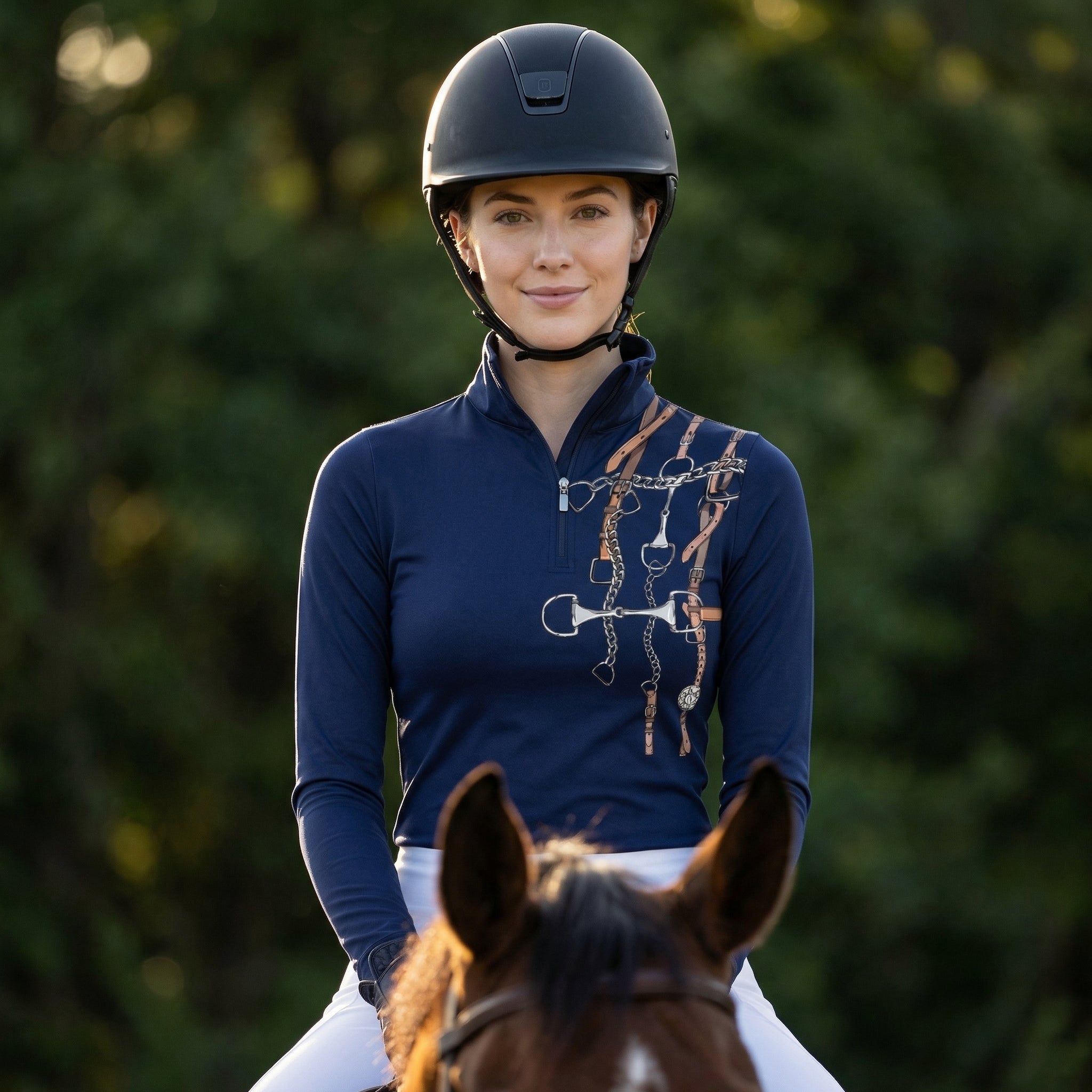
The human-horse bond isn't just a nice sentiment. It's the foundation of equestrian culture. It's what separates our sport from every other. And it's what we're finally learning to protect—and celebrate.
Chapter 1: What Makes the Human-Horse Bond Unique?
In most sports, your equipment is passive. A tennis racket doesn't have a heartbeat. A soccer ball doesn't have a personality.
But a horse?
A horse is a partner. A teammate. A living, breathing, feeling being who chooses to work with you—or not.
Equestrian culture is built on this voluntary partnership. As the UNESCO recognition of equestrian art describes it, the practice is "based on respect for the animal and its well-being" and establishes "a sense of harmony and deep respect between rider and horse, with the rider communicating with the horse to encourage its willing collaboration, without the use of force."
That's not just sport. That's relationship.
Chapter 2: The Health Benefits of the Bond
The human-horse bond isn't just emotionally fulfilling—it's good for you.
Research from the American Heart Association shows that horseback riding offers significant health benefits, including cardiovascular exercise, core strength development, and calorie burning . A 45-minute ride at walk, trot, and canter can burn up to 200 calories, while more strenuous activities like reining can burn nearly 7 calories per minute .
But the physical benefits are only half the story.
Studies show that being around animals can lower blood pressure . And more than 80% of riders report that horseback riding creates feelings of relaxation and happiness .
There's a reason the old quote endures: "Nothing is so good for the inside of a man than the outside of a horse."
Chapter 3: The Bond in Action—Everywhere
The human-horse bond isn't confined to the show ring.
It's there in the barn at 6 a.m., when you're mucking stalls and your horse nickers a greeting. It's there in the training ring, when you're learning to communicate with a subtle shift of your weight. It's there in the therapeutic riding center, where horses help people with disabilities find movement, confidence, and joy.
As one equestrian organization puts it: "We celebrate the unique bond between horse and human (#TwoHearts) and strive to develop equestrian sport globally in a modern, sustainable and structured manner with guaranteed athlete welfare, equal opportunity and ethical partnership with the horse."
The bond is the thread that connects every discipline, every level, every rider.
Chapter 4: The Ethical Evolution
There's growing recognition across the equestrian world that the human-horse bond comes with responsibility.
Organizations are prioritizing horse welfare more than ever. British Equestrian's "Charter for the Horse" (launched in March 2024) outlines six key commitments: empathy, care, respect, consideration, ethics, and learning .
The Charter states: "Empathy—Recognising horses are intelligent and emotional beings, we always prioritise their mental and physical health and overall wellbeing."
Similarly, the FEI's Equine Ethics and Wellbeing Commission was established in 2022 to safeguard equine welfare through ethical, evidence-based policy .
This isn't just PR. It's a cultural shift.
Riders are asking harder questions. Trainers are evolving their methods. And the community is recognizing that a horse's welfare isn't a compromise—it's the point.
Chapter 5: The Global Bond
The human-horse bond isn't uniquely American or European. It's global.
UNESCO has recognized equestrian art in Portugal as an intangible cultural heritage, celebrating the "harmony and deep respect between rider and horse" . In Sri Lanka, the relationship between humans and horses spans at least 4,000 years of history .
Equestrian culture connects us across borders, disciplines, and traditions. It's the shared language of partnership with another species.
Chapter 6: Why the Bond Matters More Than Ever
In a world that's increasingly digital, disconnected, and fast-paced, the human-horse bond offers something rare: presence.
You can't scroll on your phone while you're riding. You can't multitask your way through a training session. To ride well is to be fully present—with your horse, your body, and the moment.
That presence is healing. It's grounding. It's why so many riders describe the barn as their sanctuary.
And it's why the bond must be protected—not just for the horses, but for us.
Chapter 7: What You Can Do
Here's how every rider can honor the human-horse bond:
-
Listen to your horse. If he's resistant, ask why. Trust his instincts.
-
Prioritize welfare. That means good feed, proper turnout, regular vet care, and rest.
-
Educate yourself. Learn about equine behavior, body language, and stress signals. The more you understand, the better partner you'll be.
-
Speak up. If you see a horse being treated poorly—at a show, in a lesson barn, anywhere—say something. The bond includes advocating for those who can't advocate for themselves.
-
Celebrate the small moments. The nicker. The nuzzle. The happy sigh. That's the bond. Don't take it for granted.
The Final Thought
Ribbons fade. Scores are forgotten. Coats go out of style.
But the human-horse bond?
That stays.
It stays in the way your horse whinnies when he sees you. In the trust he shows when he jumps a fence you've asked him to. In the quiet, wordless understanding that passes between you when everything else falls away.
That's equestrian culture. That's the heart of it all.
And it's worth protecting—with everything we've got.