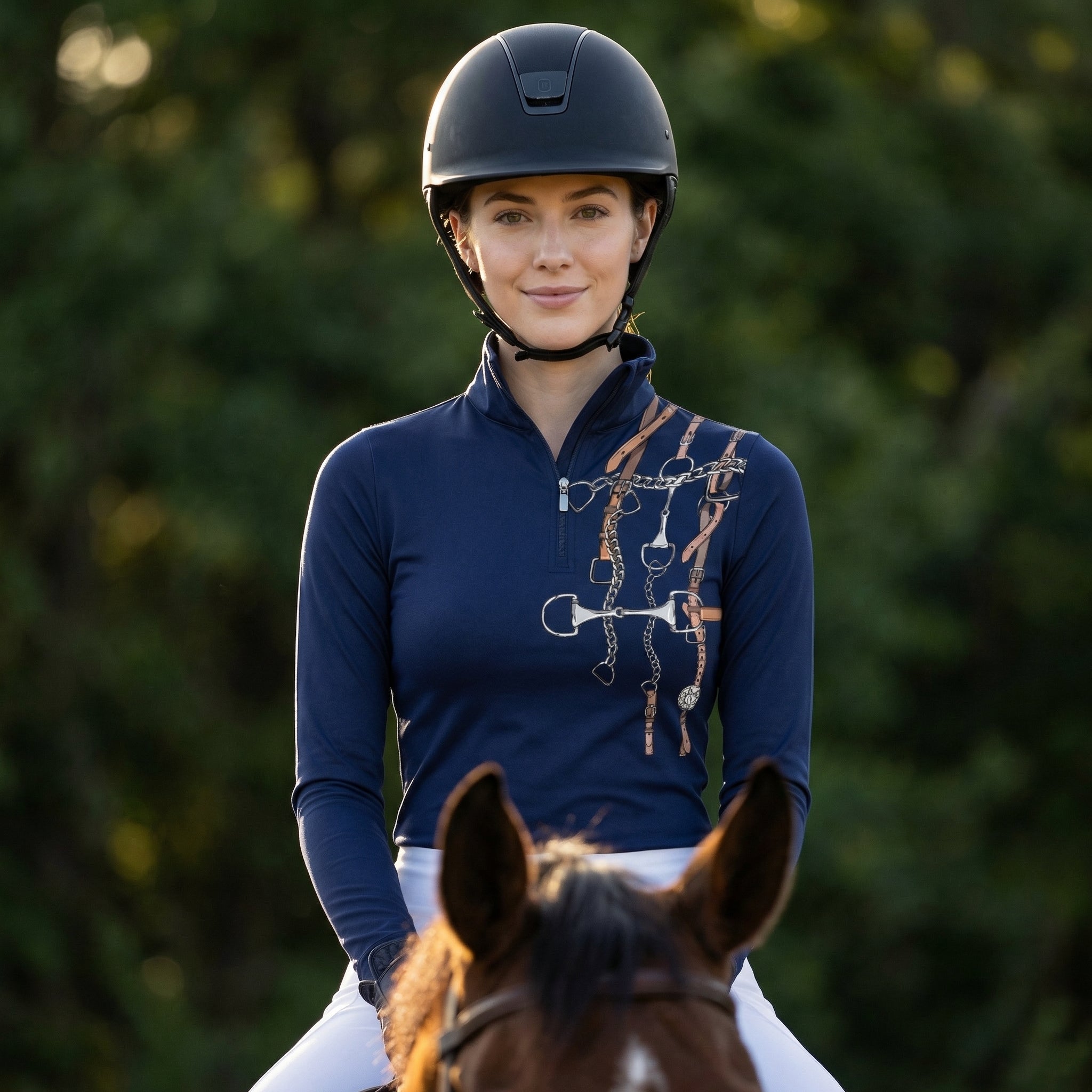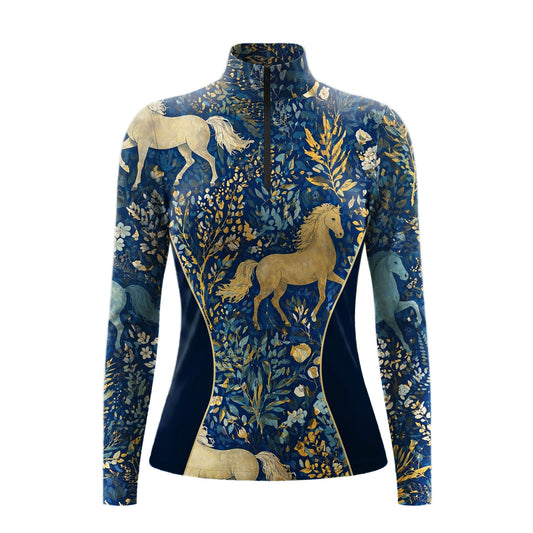

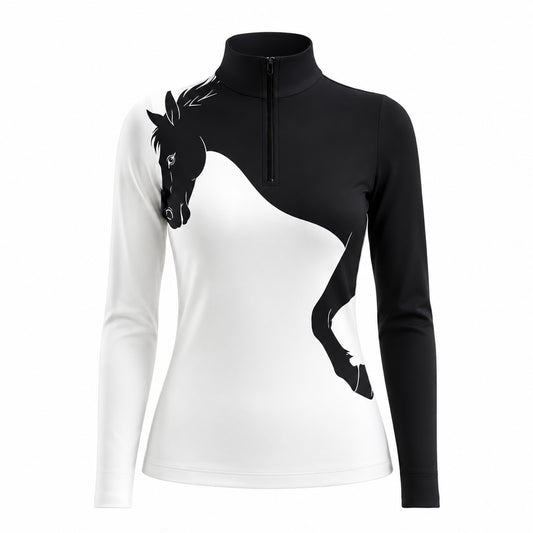

The Hidden Layer: Why Your Riding Base Layer Matters More Than Your Jacket
We spend so much time thinking about jackets, breeches, and boots. But the most important piece of clothing you wear in the saddle is the one closest to your skin — your base layer.
If your base layer is wrong, you will feel it immediately. It bunches under your arms, causes chafing where you sit, holds sweat against your body, and makes you shiver the moment the temperature drops.
If your base layer is right, you forget you are wearing it. You stay dry, your skin breathes, and you can focus entirely on your horse.
Why Cotton Is the Enemy in the Saddle
If you take one piece of advice from this guide, let it be this: do not wear cotton as a base layer while riding.
Cotton absorbs moisture and holds it against your skin. When you sweat during a hard ride, a cotton shirt becomes wet and heavy. When the ride ends and the wind hits you, that wet cotton pulls heat away from your body instantly, leaving you cold and shivering. It also loses its shape, bunching up uncomfortably under a riding jacket.
Look for synthetic blends or merino wool instead. They move sweat away from your skin to the outer surface of the fabric, where it can evaporate. You stay dry, warm, and comfortable in all temperatures.
The Two Best Materials for Riders
Synthetic blends (polyester and nylon). These are durable, affordable, and dry incredibly fast. They are perfect for summer riding because they are lightweight and excel at wicking sweat away from the skin.
Merino wool. This is the gold standard for year-round comfort. Merino regulates temperature naturally, keeping you cool in summer and warm in winter. It is also naturally odour-resistant, which means you can wear it for multiple rides without a wash. It is more expensive, but it is worth the investment.
The Invisible Details That Prevent Chafing
You can have the best fabric in the world, but if the seams are wrong, you will still be miserable.
Look for base layers with flatlock seams. These are stitched so that the seams lie completely flat against your skin. Raised or thick seams under your arm, or across your shoulders, will rub raw during a two-hour ride.
Also check the tags. Many technical base layers now print the size and brand directly onto the fabric. This is a small detail that makes a big difference, especially if you are prone to skin irritation.
How the Fit Affects Your Position
Your base layer should fit snugly, like a second skin. It should not be loose and baggy, because extra fabric will wrinkle under your jacket and create pressure points against the saddle.
However, it also should not be so tight that it restricts your movement. You need to be able to rotate your shoulders, stretch your arms forward, and close your hip angle without feeling restrained. Choose a fit that moves with you.
Final Thought
Your base layer is the foundation of your comfort. It is invisible to everyone else, but you feel it every single minute you are in the saddle.
Skip the cotton, look for flatlock seams, choose merino or synthetics, and make sure it fits close to your body. Your skin — and your riding — will thank you.
What is your go-to base layer for riding? Share your favourite material or brand in the comments below.