

The Right Base Layer for Every Temperature: A Simple 3-Layer System for Riders
You’ve been there.
Freezing in the indoor arena because you underdressed.
Or sweating through your show shirt 20 minutes into a flat lesson.
Here’s the truth most riders learn the hard way:
There’s no single “perfect riding top.”
There is, however, a system.
Professional riders don’t guess what to wear. They use a 3-layer system that works from freezing mornings to humid afternoons.
Let me break it down — including exactly what to look for in each layer.
Why Most Riders Get This Wrong
Two very common mistakes:
-
One heavy sweatshirt — you roast, then unzip, then freeze
-
Cotton — it stays wet, chafes under your vest, and smells by the end of the day
Cotton is fine for a 20-minute walk. It’s terrible for anything involving sweat or wind.
The fix? Think like an athlete, not a barn hand.
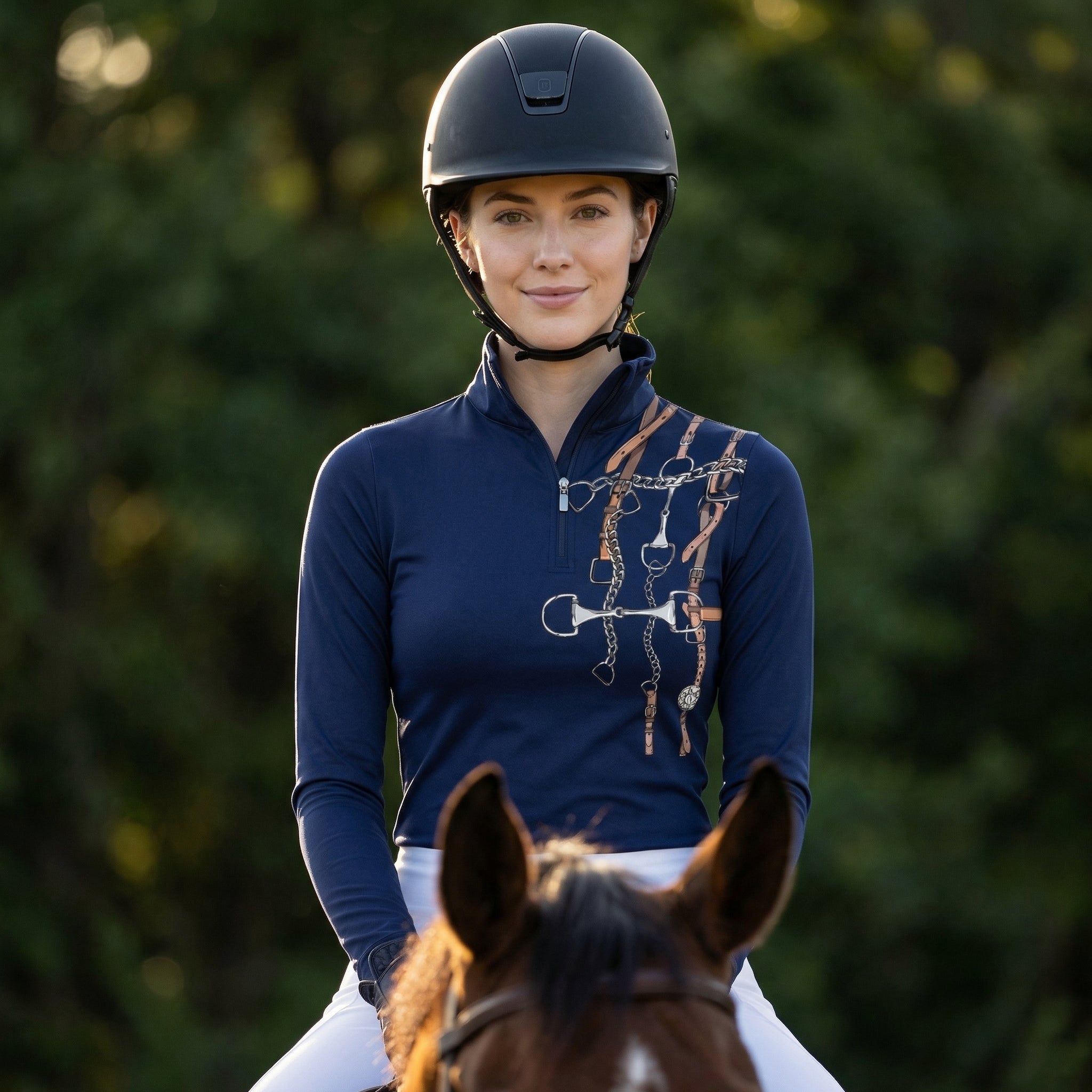
Layer 1: Base Layer (Next to Skin)
Job: Move sweat away. Dry fast. No chafing.
When to wear it: Every single ride, in every season.
What to look for:
-
Merino wool (warm when wet, naturally odor-resistant)
-
Polyester/spandex blend (cheaper, dries very fast)
-
Never cotton for any ride over 30 minutes
What to avoid:
Loose necklines (gaps let cold air in). Seams under your armpits (chafing risk).
Pro tip for riders:
A mock neck or high crew base layer protects the part of your chest your vest doesn’t cover. Game changer for windy mornings.
Layer 2: Mid Layer (Insulation)
Job: Trap warmth. Allow movement. Breathe.
When to wear it: Below 15°C (60°F), or any time you’re not moving enough to stay warm.
Best options for riders:
-
Thin fleece quarter-zip (easy venting)
-
Merino hoodie (surprisingly breathable)
-
Lightweight grid fleece (military and outdoor pros use this)
What to avoid:
Thick, puffy sweatshirts. They restrict arm movement over fences or during two-point.
Test before you buy:
Raise both arms like you’re holding reins at canter. If the hem rides up past your belt, it’s too short.
Layer 3: Outer Layer (Weather Protection)
Job: Block wind, shed light rain, but not make you sweat.
When to wear it: Wind, mist, morning dew, or any ride below 5°C (40°F)
What actually works on horseback:
-
Softshell (best for most riders — breathes + blocks wind)
-
Lightweight packable jacket (keep in your tack trunk)
-
Not a heavy raincoat (too noisy, no breathability)
The one feature riders need most:
Zippers that go both ways (top and bottom). A two-way zip lets you open from the bottom for airflow without unzipping your whole chest.
The Temperature Cheat Sheet (Print This)
| Temperature | Layer System |
|---|---|
| Above 20°C (68°F) | Base layer only |
| 15–20°C (59–68°F) | Base + thin mid (or just a long-sleeve base) |
| 10–15°C (50–59°F) | Base + mid + light vest (no outer) |
| 5–10°C (41–50°F) | Base + mid + softshell |
| Below 5°C (40°F) | Base + mid + softshell + thin glove liner |
Humidity rule: Add one extra layer of ventilation. Humid cold feels colder than dry cold.
The Single Biggest Mistake Riders Make
Overdressing before they start moving.
You warm up within 10 minutes of trot work. If you feel perfectly warm while tacking up, you’re overdressed.
The right test:
Stand outside for 2 minutes before you mount. If you feel a little chilly but not shivering — perfect. That’s your warm-up temperature.
What This Means for Your Riding Clothes Budget
You don’t need 15 tops.
You need three good pieces:
-
2 base layers (rotate wash)
-
1 mid layer
-
1 softshell outer
That system covers 90% of your riding days. And each piece lasts longer because you’re not over-washing or abusing a single sweatshirt.
A Quick Word on Care (Because It Matters)
Your base layer works only if it’s clean.
Your outer layer works only if the DWR (durable water repellent) isn’t cooked in a hot dryer.
Fast rules:
-
Base layers: wash cold, hang dry
-
Mid layers: zip zippers before washing (saves the pulls)
-
Outer layers: no fabric softener (ruins breathability)
Yes, it’s more careful than jeans. But your comfort on horseback is worth the extra 30 seconds.
Bottom Line
Stop guessing what to wear.
Start using a system.
Base layer (dry) → Mid layer (warm) → Outer layer (protected).
Your focus belongs on your horse’s rhythm, not on being miserably hot or cold.
And when your body is comfortable?
You sit deeper. Your hands get softer. Your ride just… works better.