

Your First Ride: What Every Beginner Wishes They Knew (But Nobody Tells You)
You've watched the videos. You've read the articles. You've even practiced your "riding face" in the mirror. Then you sit on a real horse for the first time—and everything changes.
Suddenly, that 1,200‑pound animal feels very big. Your legs are shaking. Your hands don't know where to go. And the instructor keeps saying "relax" like it's the easiest thing in the world.
After teaching hundreds of first‑time riders, I've noticed the ones who improve fastest share one thing: they show up with the right mindset—and a few insider tricks most beginners never learn until months later.
Here are 7 things every beginner wishes they knew before their very first ride.
1. Your Hands Are Not Your Steering Wheel
The myth: Pull left to turn left, pull right to turn right.
The truth: Your seat and legs steer. Hands are for fine‑tuning.
Do this instead:
-
Turn your shoulders and hips in the direction you want to go.
-
Squeeze with your inside leg at the girth.
-
Keep your outside rein steady—think "elastic band," not "rope."
2. Breathe. Seriously.
Nervous riders hold their breath. Your shoulders rise. Your legs stiffen. Your horse thinks: "Something's wrong!"
The fix:
-
Before mounting: 3 deep belly breaths.
-
While riding: chant "breathe‑in‑two‑three, breathe‑out‑two‑three" to the walk rhythm.
-
Check your shoulders—drop them down and back.
Why it works: A calm breath = a calm horse.
3. The Walk Is Your Classroom—Not "Boring"
Beginners who rush to trot on day one miss the foundation.
Master these at the walk:
-
Stop and go with your seat (not reins)
-
Turn with your body and legs (not pulling)
-
Sit deep without gripping with your knees
Challenge: Spend your first ride only at the walk. You'll trot better later.
4. Heels Down—But Soft, Not Locked
"HEELS DOWN!" doesn't mean jam your heel and lock your ankle.
The real goal: Let your weight drop through your heel with a flexible ankle. Think shock absorber, not steel rod.
Off‑horse practice:
-
Stand on a step, toes on edge, let heels drop below. Hold 30 seconds. Daily.
-
That stretch = the feeling you want in the saddle.
5. Grip with Your Core, Not Your Knees
Knee‑gripping pushes you up and forward—the opposite of secure.
Do this instead:
-
Hug the horse with your upper inner thighs and calves—not knees.
-
Engage your core (belly button to spine) to stay tall and stable.
-
Your knee rests against the saddle, not clamped onto it.
Quick test: While walking, try lifting your knee slightly off the saddle. Can't do it? You're gripping too hard.
6. The Horse Knows You're a Beginner—And That's Okay
Horses read your body language. They don't judge—they just need clear signals.
What your horse wants:
-
Kindness (soft hands, gentle voice)
-
Clarity (one signal at a time)
-
Patience (time to process)
Don't "nag" with repeated kicking or pulling. The horse tunes out.
Instead: Ask once. Wait 2 seconds. Reward the try—not perfection. A soft rein and a "good" teach your horse that trying pays off.
7. Your First Ride Is About Feel, Not Perfection
Forget toe angles, shoulder positions, and diagonals. Nobody gets that right on day one.
Your only goals for ride #1:
-
Feel the horse's rhythm
-
Build trust (grooming, leading, standing still count too)
-
Stay safe and have fun
Permission slip: You don't have to be perfect. Just show up, try, and listen.
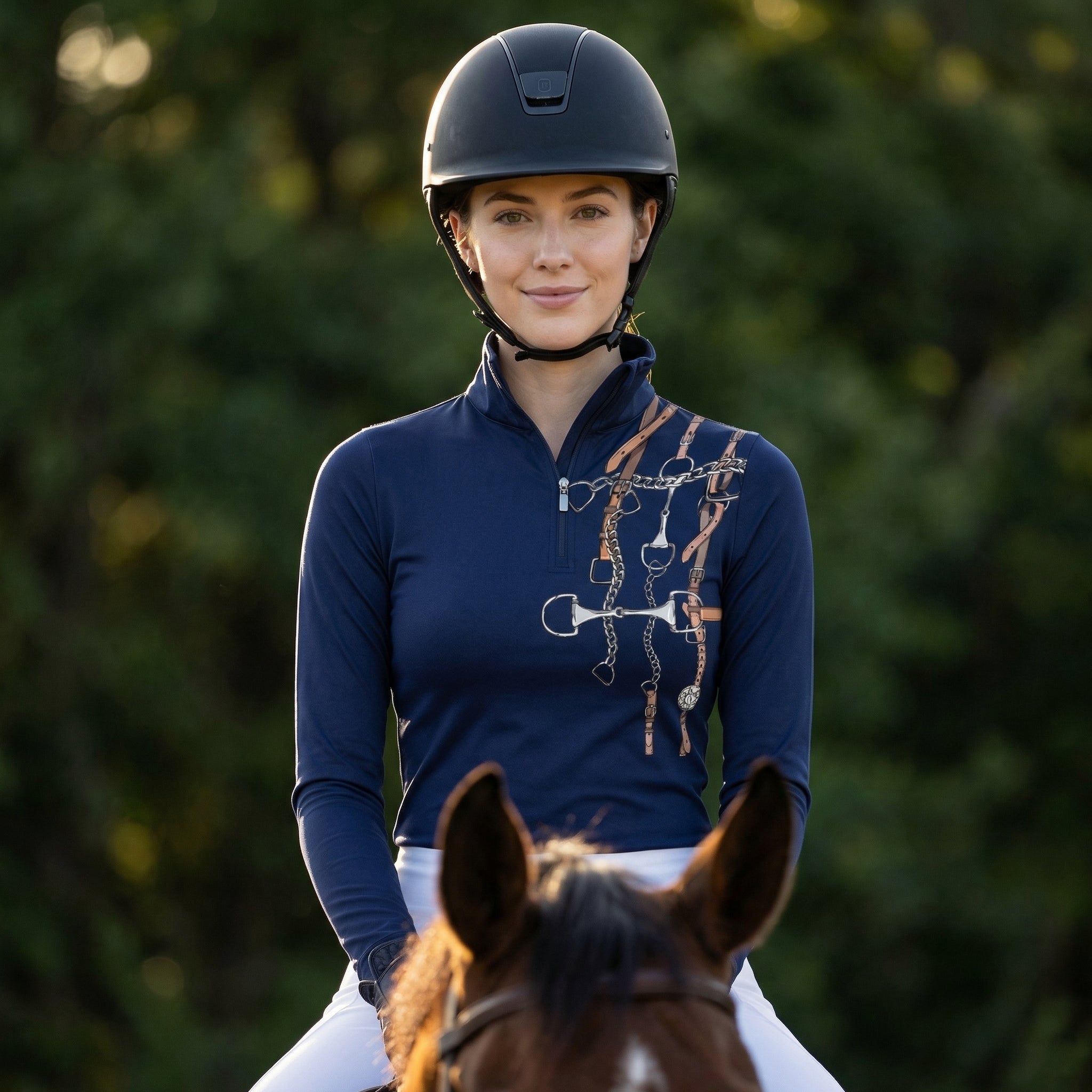
Bonus: What to Wear (Quick Version)
| Do Wear | Don't Wear |
|---|---|
| ASTM/SEI riding helmet | Bicycle or ski helmets |
| Boots with 1–1.5" heel | Sneakers or flat soles |
| Fitted pants (breeches/leggings) | Baggy jeans |
| Gloves | Loose jewelry |
Final Thought
Your horse wants to be your partner, not your project.
You don't have to master riding in one ride. You don't have to impress anyone. Just show up with an open heart, a curious mind, and a willingness to listen.
The riders who fall in love with horses—not just riding—are the ones who stay for life.
So take a deep breath. Mount up. And enjoy your first ride. 🐴