

Beyond Cotton: The Science Behind Modern Equestrian Fabrics
What makes a performance fabric truly perform? A deep dive into the technology that keeps riders comfortable, focused, and connected to their horses.
Walk into any tack shop twenty years ago, and the fabric choices were simple. Cotton. Wool. Maybe some synthetic blends if you knew where to look.
Walk in today, and the options can feel overwhelming. Moisture-wicking. Four-way stretch. Breathable membranes. Antimicrobial finishes. The terminology alone is enough to make your head spin.
But here's the thing: these aren't just marketing buzzwords. For riders who spend hours in the saddle, the difference between a basic fabric and a true performance textile isn't subtle—it's the difference between finishing a ride feeling fresh or feeling drained.
In this guide, we're pulling back the curtain on the science behind modern equestrian fabrics. What do these terms actually mean? How do they affect your ride? And most importantly—how do you choose the right materials for your time in the saddle?
Chapter One: A Brief History — What Riders Used to Wear
Before we explore where we're going, it helps to understand where we started.
Cotton was the go-to for generations. It's soft, breathable, and comfortable against skin. But cotton has a fatal flaw for active riders: it absorbs moisture and holds it. Ride hard in a cotton top, and you'll finish soaking wet—and stay that way until you change.
Wool was the winter alternative. It insulates even when damp, which made it valuable for cold-weather riding. But traditional wool can feel scratchy against skin, and it's often too heavy for the kind of layered dressing modern riders prefer.
Early synthetics—nylon, polyester—brought durability and wrinkle resistance. But they also brought a plastic-y feel and poor breathability. Riders gained convenience but lost comfort.
The real revolution began when textile engineers started asking a simple question: What if we could design fabrics from the ground up for what athletes actually need?
That question changed everything.
Chapter Two: The Four Pillars of Performance Fabrics
Modern equestrian fabrics are engineered to deliver four essential qualities. Understanding these four pillars will transform how you evaluate any riding top.
Pillar One: Moisture Management
What it is: The ability to move sweat away from your skin and release it into the air.
How it works: This isn't magic—it's physics. Performance fabrics use specialized fiber structures and finishes that create "capillary action." Think of it like a series of tiny straws that pull moisture from your skin, spread it across a larger surface area, and accelerate evaporation.
Why riders need it: A ride that starts at 8 AM might end with you thoroughly warmed up. Moisture-wicking fabric keeps sweat from pooling against your skin, which means:
-
No clammy feeling halfway through your session
-
Less risk of chafing in sensitive areas
-
Better temperature regulation (wet skin cools too quickly when you stop moving)
-
You stay comfortable from warm-up to cool-down
What to look for: Terms like "moisture-wicking," "quick-dry," and "hydrophilic/hydrophobic fiber blends." High-quality polyester and nylon blends engineered specifically for this purpose outperform generic synthetics.
Pillar Two: Stretch and Recovery
What it is: The fabric's ability to stretch with your movement and return to its original shape.
How it works: This is where elastane (often known by brand names like Lycra or Spandex) comes in. When combined with base fibers like polyester or nylon, elastane creates a fabric that flexes under tension and snaps back when released.
Why riders need it: Riding is not a stationary activity. Your shoulders reach forward. Your legs lengthen down. Your torso twists and bends with every stride. A fabric without stretch:
-
Restricts movement, affecting your position
-
Creates uncomfortable pulling at seams
-
Can tear or stress under repeated motion
But not all stretch is created equal. The magic is in four-way stretch—fabric that stretches both lengthwise and widthwise, moving with the full range of a rider's motion.
What to look for: Check the fabric composition. For serious performance, look for at least 5-10% elastane content. And pay attention to "recovery"—stretch the fabric in your hands. Does it snap back? Or does it stay slightly stretched? Good recovery means your garment won't sag or bag after hours in the saddle.
Pillar Three: Breathability
What it is: The fabric's ability to allow air to pass through, carrying heat and moisture vapor away from your body.
How it works: Breathability is measured in two ways: air permeability (how easily air moves through the fabric) and moisture vapor transmission (how quickly sweat vapor escapes). High-performance fabrics are engineered with open structures that facilitate this exchange while maintaining the integrity of the textile.
Why riders need it: Ever worn a rain jacket on a mild day and felt like you were in a sauna? That's poor breathability. In the saddle, your body generates significant heat. If that heat can't escape:
-
Your core temperature rises
-
You sweat more to cool down
-
You fatigue faster
-
Your focus drops
Breathable fabric keeps this cycle in check, helping you maintain comfort and concentration through long training sessions.
What to look for: Lightweight constructions, mesh panels in high-heat areas, and fabrics specifically engineered for athletic use. If a fabric feels plasticky or doesn't let air pass when you blow through it, it's probably not breathable enough for serious riding.
Pillar Four: Durability
What it is: The fabric's ability to withstand repeated wear, washing, and stress without degrading.
How it works: Durability comes from fiber quality, yarn construction, and fabric finishing. Higher-denier fibers (thicker individual threads) generally last longer. Tight, stable knits resist pilling and snagging. Quality finishing ensures colors stay vibrant wash after wash.
Why riders need it: Riding apparel takes abuse. It stretches. It rubs against saddles. It gets washed frequently. A fabric that looks great after one wear but fades, pills, or loses shape after ten washes isn't a performance fabric—it's a disappointment.
What to look for: Established brands with quality control. Read reviews. And remember: a slightly higher investment in quality fabric pays dividends in longevity.
Chapter Three: By the Season — Matching Fabric to Conditions
Different rides demand different fabrics. Here's how to think about seasonal selection.
Summer Riding
Priority: Breathability and moisture management
Look for:
-
Lightweight constructions (lower GSM—grams per square meter)
-
Open weaves that allow air circulation
-
Lighter colors that reflect rather than absorb heat
-
Mesh paneling in key areas
What works: Performance polyester blends engineered specifically for warm weather. Some riders also love merino wool blends for summer—natural, breathable, and naturally odor-resistant, though often pricier.
Winter Riding
Priority: Insulation without bulk
Look for:
-
Thermal base layers that trap warm air close to the body
-
Mid-layers that provide warmth while allowing freedom of movement
-
Fabrics with a soft, warm inner face
-
Quarter-zips that allow temperature adjustment
What works: Technical fleeces, brushed-back performance fabrics, and merino wool blends excel in cold weather. The key is layering—multiple thin,高性能 layers work better than one thick, restrictive layer.
Transitional Seasons (Spring/Fall)
Priority: Versatility
Look for:
-
Mid-weight fabrics that work alone or as layers
-
Pieces that transition from cool morning rides to warmer afternoons
-
Quarter-zips and other adjustable features
What works: This is where performance fabrics truly shine. A good mid-weight technical top can take you from a chilly 7 AM ride through a pleasant afternoon without needing to change.
Chapter Four: Beyond the Basics — Advanced Fabric Technologies
For riders who want to dive deeper, here are some of the advanced technologies finding their way into equestrian apparel.
Antimicrobial Finishes
What it does: Inhibits the growth of odor-causing bacteria on fabric.
Why it matters: Performance fabrics get sweaty. Without antimicrobial treatment, that sweat creates a breeding ground for bacteria—and the odors that come with them. Quality antimicrobial finishes keep your gear fresher, longer.
What to know: Look for silver-based or zinc-based antimicrobial treatments. These are durable, effective, and environmentally responsible when properly applied.
UV Protection
What it does: Blocks harmful ultraviolet radiation from reaching your skin.
Why it matters: Riders spend hours outdoors. Sun exposure adds up. Fabrics with UV protection (often measured as UPF—Ultraviolet Protection Factor) provide a physical barrier that sunscreen alone can't match.
What to know: UPF 50+ blocks 98% of UV radiation. Darker colors and tighter weaves generally offer more protection, but specialized treatments can enhance any fabric's UV resistance.
Recycled and Sustainable Fibers
What it does: Repurposes materials like plastic bottles or textile waste into new performance fabrics.
Why it matters: The equestrian community shares a deep connection to the natural world. Sustainable fabric choices honor that connection by reducing environmental impact.
What to know: Recycled polyester can perform identically to virgin polyester. The key is in the engineering—quality recycled fabrics maintain all the performance characteristics riders need.
Chapter Five: How to Read a Fabric Label — A Rider's Guide
Next time you're shopping for riding apparel, here's what to look for on that tiny tag.
The Composition Breakdown
Polyester: The workhorse of performance fabrics. Durable, quick-drying, and easily engineered for moisture management. Look for "performance polyester" or "recycled polyester" for enhanced qualities.
Nylon: Stronger and often softer than polyester. Excellent durability and good moisture management. Often used in blends for its strength-to-weight ratio.
Elastane/Spandex/Lycra: The stretch provider. Higher percentages (8-12%) mean more stretch and better recovery. Lower percentages (2-5%) provide shape retention without extreme stretch.
Merino Wool: Natural performance fiber. Breathable, odor-resistant, and temperature-regulating. Often blended with synthetics for durability and easier care.
Cotton: Natural and comfortable, but poor for active use unless specially treated or blended with performance fibers. Save 100% cotton for barn chores, not serious riding.
The Care Clues
Performance fabrics need proper care to maintain their qualities:
-
Wash in cold water (heat damages elastane and some finishes)
-
Avoid fabric softeners (they coat fibers and reduce moisture-wicking)
-
Air dry when possible (high heat degrades performance fibers)
-
Close zippers before washing (prevents snagging)
Follow these guidelines, and your performance gear will perform longer.
Chapter Six: The RiderAtelier Approach to Fabric
At RiderAtelier, we don't just buy fabric off a shelf. We specify exactly what our garments need.
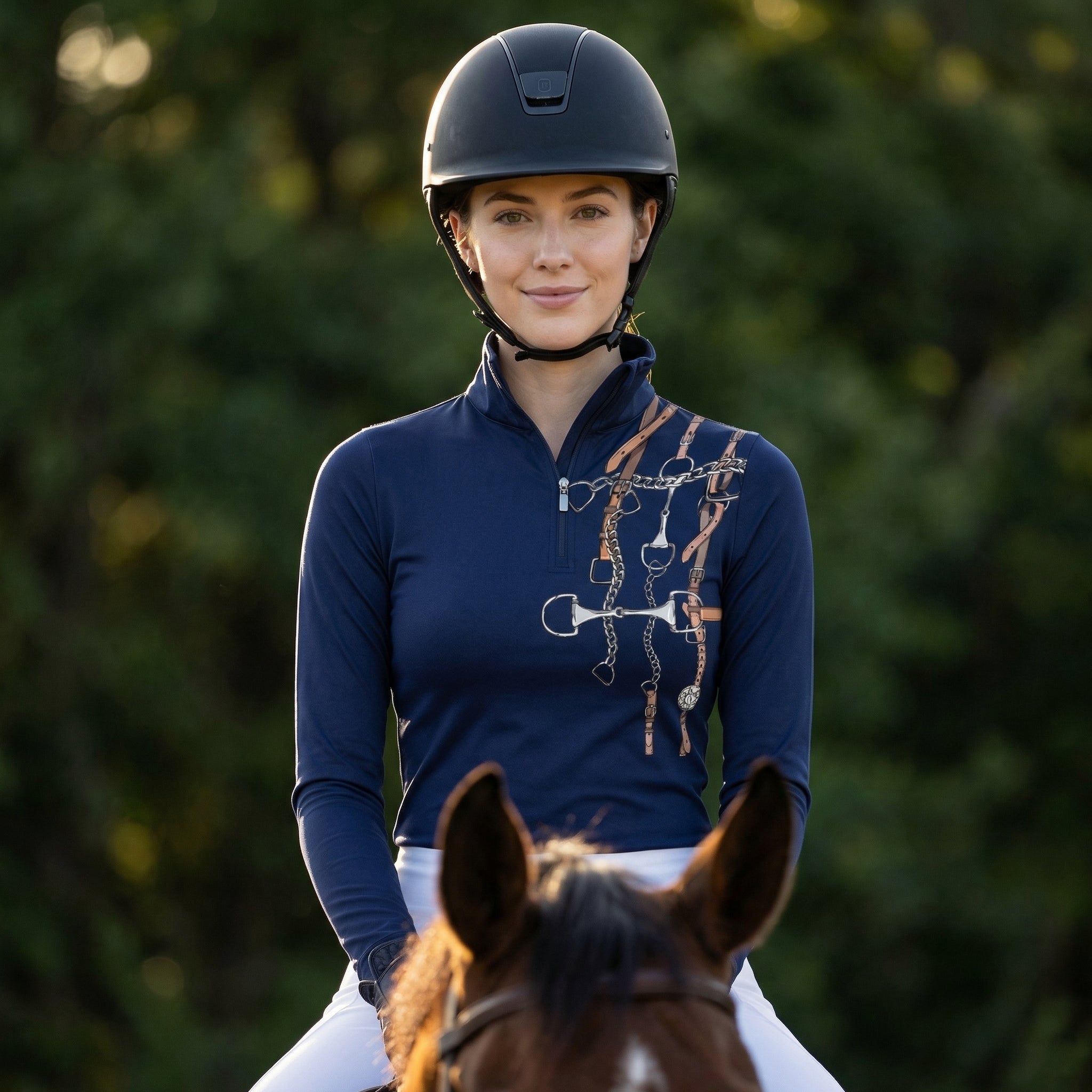
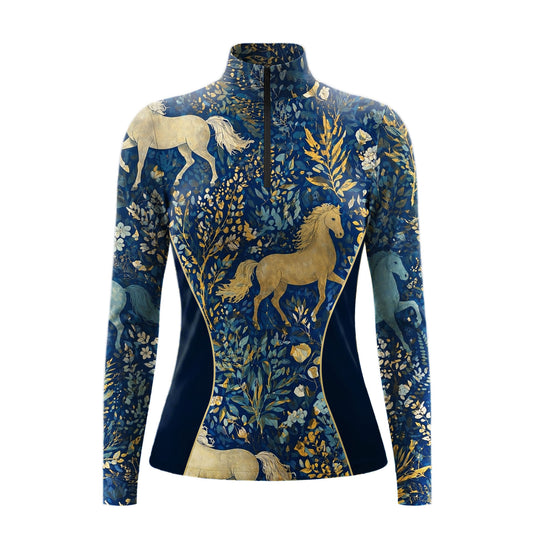
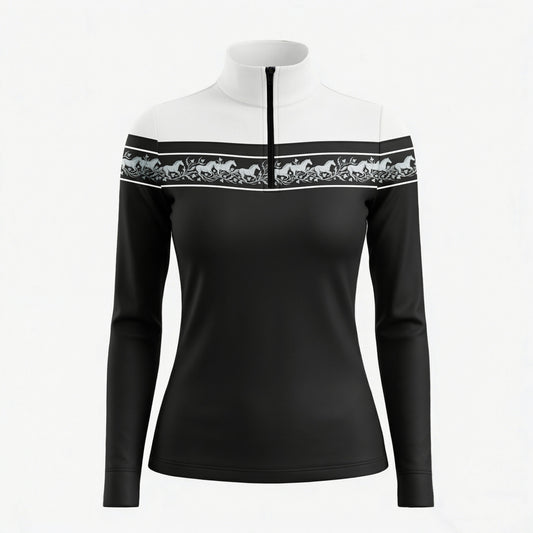
For the Tack Bouquet collection, we spent months testing fabrics before finding the one that met all our requirements:
-
The right stretch: Enough freedom for any movement, with recovery that lasts
-
The right weight: Light enough for comfort, substantial enough for quality
-
The right hand-feel: Soft against skin, never scratchy or plasticky
-
The right print surface: Smooth enough to showcase every detail of our hand-drawn artwork
-
The right durability: Engineered to maintain performance wash after wash
Our fabric is a high-performance polyester-elastane blend, chosen specifically for riders who demand both comfort and style. It wicks moisture, breathes freely, stretches fully, and recovers completely. And most importantly—it holds our original prints with stunning clarity, even under tension.
Because at RiderAtelier, we believe you shouldn't have to choose between performance and beauty. Great fabric delivers both.
The Takeaway: Why Fabric Matters
Here's the truth: you can't ride your best if you're not comfortable.
It's that simple. Every moment you spend adjusting a too-tight sleeve, every distraction from sweat trickling down your back, every minute you're cold because your layer isn't working—all of it pulls focus away from what matters: your connection with your horse.
Good fabric doesn't just feel nice. It frees you. It disappears. It lets you focus on your position, your aids, your partnership.
The next time you pull on a riding top, take a moment to appreciate what went into that fabric. The engineering. The testing. The understanding of what riders actually need.
And if you're wearing RiderAtelier—know that every fiber was chosen by people who ride. People who know what it feels like to spend hours in the saddle. People who believe that great performance and beautiful design can exist in the same garment.
Because they can.
And you deserve both.
Ride beautifully. Ride comfortably. Ride in fabric that works as hard as you do.